
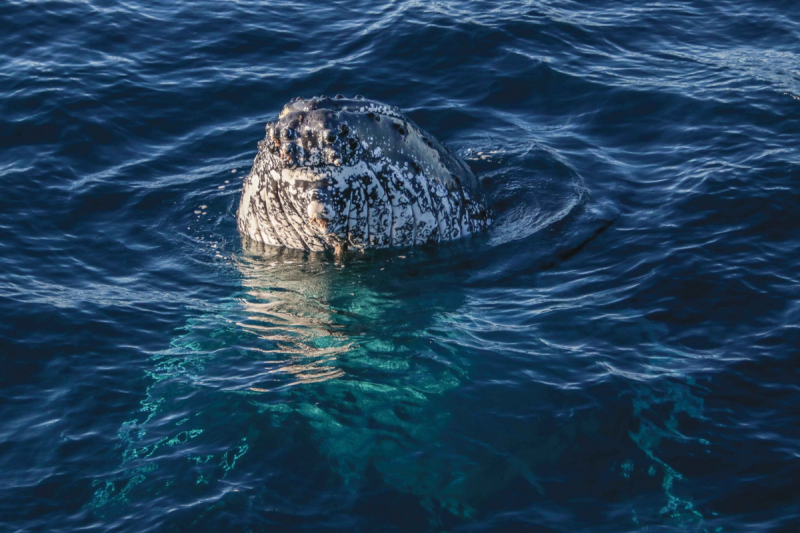
What whale-watching Gold Coast guests notice first is how close in the humpbacks come. From early July, the northbound migration is in full swing past Main Beach, and the whales travel along a coastal corridor close enough that you don't always need a boat to see them. You do, however, see more from a boat. Either way, mid-winter is the moment, and the tours and shore points are all within a short drive or walk of Ocean Sands.
The migration peaks across July and August. Northbound humpbacks pass first, heading to warmer breeding waters off the Whitsundays and the Great Barrier Reef. From late August into November the same whales head south again, this time with calves, often slower and closer to the coast. School holidays just wrapped up early in the month, which means tour boats are running near full but the worst of the queues are gone.
Tours departing within five minutes of Ocean Sands
A few operators run from points genuinely close to Hughes Avenue. The water itself is cold in July, the days are mild, and most cruises are 2 to 2.5 hours.
Sea World Cruises runs the largest operation, departing from the Sea World Cruise Terminal on Seaworld Drive. It's a 5-minute drive from Ocean Sands, or about 15 minutes if you walk along the Spit. They run multiple departures a day from late May through early November (8am, 9am, 11am, 12pm, 2pm and 3pm in peak season), the boats are purpose-built for stability, and they offer a free return cruise if no whales are sighted. The morning sailings tend to have the best light for photographs.
Spirit of Gold Coast Whale Watching departs from the Aqua Adventure Centre at 95 Marine Parade, Southport, about 7 minutes by car. The vessel is a 24-metre power catamaran with 360-degree viewing decks, and the tour runs around 2.5 hours. They've been operating for over 25 years, which tends to show in how quickly the crew read the water and reposition.
Whales in Paradise is the third option close by, with their booking office at 23 Ferny Avenue, Surfers Paradise, around 6 minutes south. They also offer a 100% sighting guarantee and run morning and afternoon departures across the season.
If you want to compare departure times and pricing across operators, Experience Gold Coast keeps a current listing of every whale watching tour running across the region.
Watching from shore: the Spit, Federation Walk, and Main Beach
You can see whales from land. The trick is knowing where to look and going early.
The Spit is the standout, and from Ocean Sands it's a 10-minute walk up the Esplanade. The dunes give you elevation, and the eastern side faces straight into the migration route. Federation Walk Coastal Reserve sits just south of the Spit and runs through native banksia bushland with regular beach access points; the path is flat and well marked, and the elevated lookouts give you a wider arc of ocean to scan. From Main Beach itself, anywhere along the Esplanade works on a calm morning, particularly the elevated dune sections.
The whales are most active from around 7 to 9am. Spouts go up first, sometimes a kilometre offshore, sometimes much closer. A breach is hard to miss but rare; pec slaps and tail flukes are more common, and binoculars make all of it more rewarding. Bring a flask of coffee. The wind off the water in July is properly cold by Gold Coast standards.
Burleigh Heads headland gets mentioned often as the Gold Coast's premier shore-watching spot, and on its day it earns the reputation. From Ocean Sands it's about 20 minutes by car though, which is more of a half-day commitment than a morning walk. If you've got the time and the weather is settled, the Burleigh National Park headland walk pairs well with breakfast in the village afterwards. For most guests, the Spit is the better return on effort.
What to bring on a tour
Even on a mild July day, the wind on a 2.5-hour cruise drops the felt temperature considerably. Layers, a windproof jacket, sunscreen, and a hat are the basics. Sunglasses help, both for glare and for spotting spouts in the chop. A camera with optical zoom produces noticeably better whale shots than a phone, though phones do the job for breach moments if you're quick. Motion sickness patches are worth a thought if you're at all susceptible. The Broadwater is calm but the open water beyond the seaway gets choppy, and that's where most of the watching happens.
Tours from July through September book out, particularly weekends. A day or two ahead is usually enough, but for a Saturday morning during peak migration, give it more notice.
Mini-FAQ
When is the best time of day to go whale watching?
Morning departures, between 8am and noon, generally produce the best light for photography and the calmest sea state. Whales are active throughout the day, but visibility off the water tends to be cleanest before midday.
Can I see whales from the beach at Main Beach?
Yes, particularly from the Spit and the elevated dune sections of the Esplanade. Early morning and late afternoon are the best windows. Binoculars help.
How long are the cruises?
Most Gold Coast whale-watching cruises run between 2 and 2.5 hours, plus 20 minutes of check-in. Allow about three hours total.
Do I need to book in advance?
For July and August, yes, especially weekends. A day or two ahead is typically enough; longer for peak weekends.
Plan the trip
Ocean Sands is a 10-minute walk from the Spit, 5 minutes from the Sea World Cruise Terminal, and a short drive from every operator listed above. Our 2 and 3 bedroom apartments are the easy base for a winter break built around whale watching, with a heated indoor pool and spa for warming up afterwards. To check availability for July or August, head to our contact page or call the front desk. We'll happily point you to the right operator for what you want out of the morning.